A properly installed barrier is the closest thing to a permanent line of defence — a continuous treated zone around and under the structure that termites can't tunnel through without picking up a lethal dose.
A termite barrier isn't a physical block that stops termites walking through soil. It's a treated zone in the soil (and sometimes concrete penetrations) around and under the building, using a non-repellent termiticide.
Because it's non-repellent, termites can't detect it and avoid it — they tunnel straight through, pick up the active ingredient, and carry it back to the colony, where it spreads through grooming and feeding contact. Done properly, this can affect the wider colony, not just the individuals that crossed the treated zone.
Every access point around the structure is mapped — garden beds, paths, slabs, service penetrations and anywhere soil meets the building.
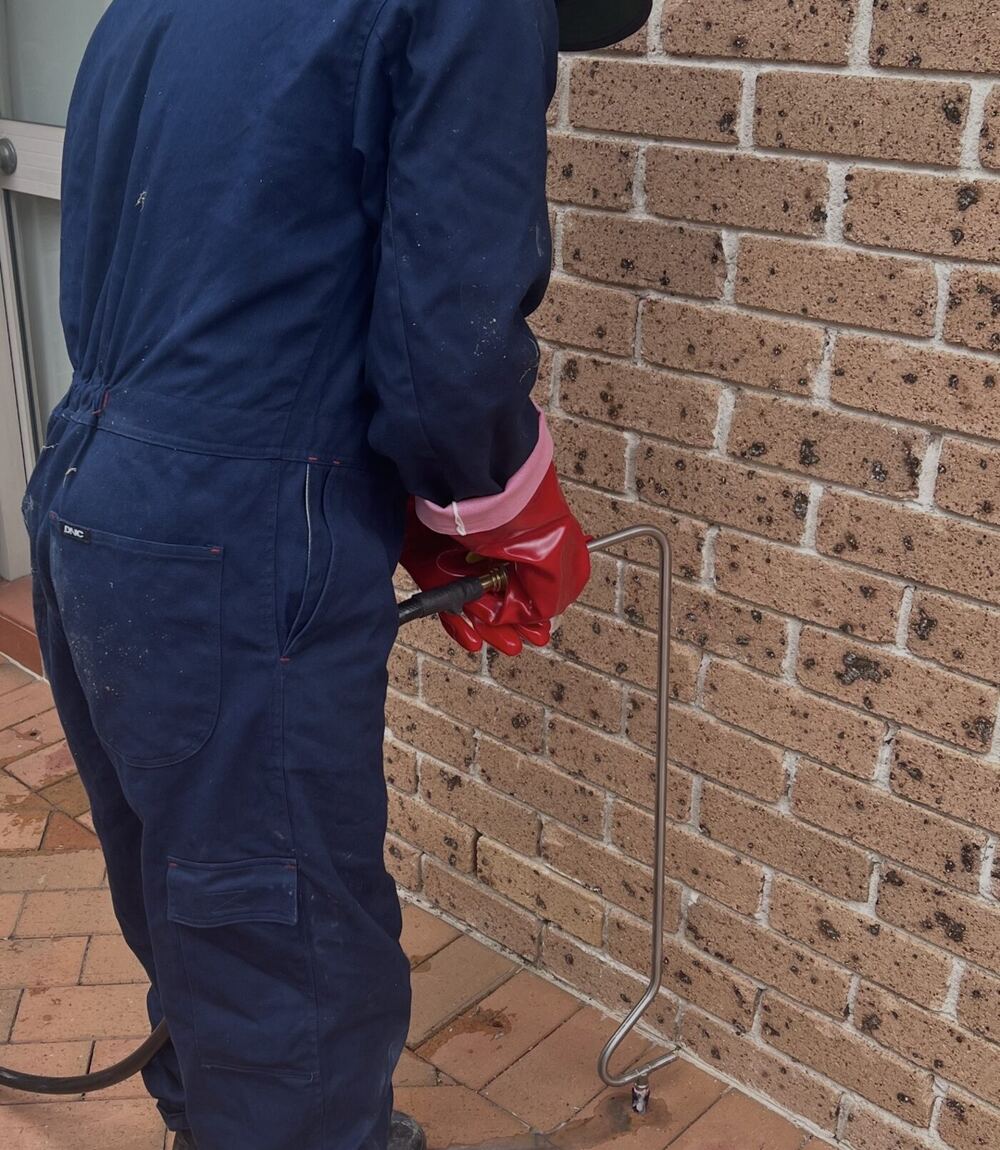
Accessible soil around the foundation is trenched and treated to the label-specified depth and concentration.
Paths, slabs and paving that sit over the barrier line are drilled so the treatment reaches the soil underneath, not just the exposed edges.
Once complete, the barrier is checked for continuity — gaps are where termites find a way around — and the work is documented for your records.
For new construction, a reticulation system can be installed under the slab during the build — a network of pipes that allows the barrier to be applied, and re-applied down the track, without digging up finished paving or landscaping later on.
If you're mid-build or planning an extension, this is worth arranging before the slab goes down rather than after.
A barrier isn't a one-off forever fix — soil disturbance, landscaping changes, gutters overflowing near the treated zone, and general weathering can all compromise it over time. That's why ongoing inspections matter, whether or not you also run a baiting and monitoring system alongside it.
It depends on the product used, soil conditions and how much the barrier is disturbed over time — we'll talk you through the expected lifespan of the specific product used on your property and when it should be reviewed.
Yes — this is the most common scenario. It takes more work than a new build (trenching around an existing foundation, drilling through existing paving) but is a standard part of what we do.
No. A barrier reduces risk significantly but doesn't remove it entirely — gaps, breaches and undetected access points can still occur, which is why annual inspections remain part of a proper termite management plan.
Many properties run a barrier alongside an in-ground baiting and monitoring system — the barrier reduces entry risk, while monitoring stations give an early warning if termites find a way around it.
One call covers termites, general pests and bird proofing — no referrals, no runaround.