If termites are active in the property right now, this is where we stop reading and start treating. We run above-ground baiting, foaming, dusting and liquid treatment — whichever combination the site and the activity actually calls for.
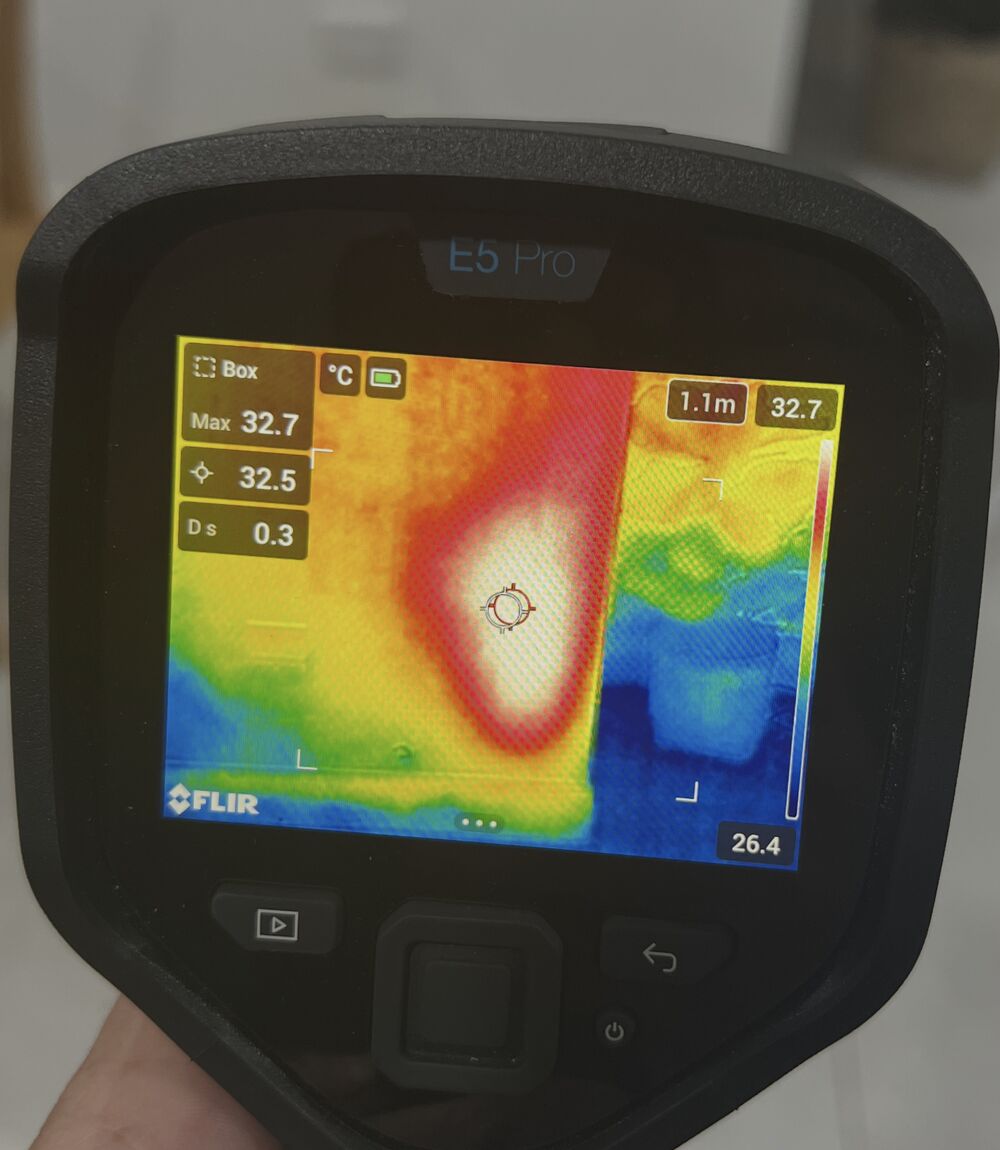
Active termites found mid-inspection change the job from "assess" to "act" — but treating blind, without knowing how far activity extends, means missing parts of the colony. Where it's not obvious visually, we use thermal imaging to trace activity through wall cavities and hard-to-access areas first.
Once we know the extent of it, treatment is matched to where the termites actually are and how active the infestation is — not a one-size-fits-all spray.
Different situations call for different tools. Here's what each one does and when we reach for it.
Bait stations placed directly at points of active activity — mud tubes, damaged timber, wherever termites are currently feeding — rather than waiting on a perimeter station to intercept them. This gets bait into the colony's feeding path fast, without needing to wait for termites to find an in-ground station.
A termiticide foam injected directly into wall cavities, voids and galleries — spaces a liquid spray or dust can't reliably reach. The foam expands to fill the void, coating surfaces termites travel across and giving much better coverage in enclosed spaces than a straight liquid application.
A non-repellent dust applied directly onto active termites and their galleries. Termites can't detect it, so they carry it back into the nest on their bodies and spread it through the colony via grooming and feeding contact — an effective way to reach termites deeper in the structure than direct contact treatment alone.
Direct liquid termiticide application to soil, timber or structural elements at the point of activity — including drilling through concrete and paving where the activity runs underneath, so the treatment goes exactly where it's needed rather than just around the edges.
Termite colonies don't sit conveniently in one accessible spot — activity can span a wall cavity, a subfloor, timber framing and soil all in the same job. Sticking rigidly to a single treatment method means leaving gaps.
In practice, most active infestations get a combination — dusting or foaming where termites are actively feeding, liquid treatment to cut off soil access, and above-ground baiting to keep pressure on the colony while the rest of the treatment takes effect.
Once active termites are dealt with, the job isn't done — we'll talk you through whether a chemical barrier, an ongoing baiting and monitoring system, or both make sense for the property so this doesn't happen again.
Call us straight away rather than disturbing the area — spraying a supermarket product on live termites can scatter the colony and make the job harder, not easier. We move quickly once you call, because active termites don't wait.
It depends on the size and location of the colony. Some jobs are resolved in a single visit; larger or harder-to-access infestations may need a follow-up to confirm activity has fully stopped, which we'll flag upfront rather than after the fact.
Usually not, but it depends on the specific method and area being treated — we'll let you know before we start if any part of the job requires you to stay clear of a space temporarily.
One call covers termites, general pests and bird proofing — no referrals, no runaround.